Is Military Housing Free? How Privatized Housing Really Works [2027]
No — military housing is not free, with one real exception. If you live in privatized base housing, your rent is set at 100% of your BAH: the military pays you the allowance, then all of it goes straight to the landlord. If you live in government-owned quarters like the barracks, it’s genuinely free — but you don’t receive BAH at all. Understanding which system you’re in changes everything about your paycheck.
I wrote this guide because most explainers online blur the two systems together, and families get surprised when their full BAH vanishes into a rent allotment they didn’t fully understand. Here’s exactly how the money works, what’s covered, what your rights are, and what changed in 2026.
Independent guide — not affiliated with the U.S. Department of Defense or any military branch.
The Two Types of Military Housing (And Why It Matters for Your Paycheck)
This is the single most important distinction in military housing — and the one most websites get wrong. There are two completely different systems, and the money flows opposite directions in each.
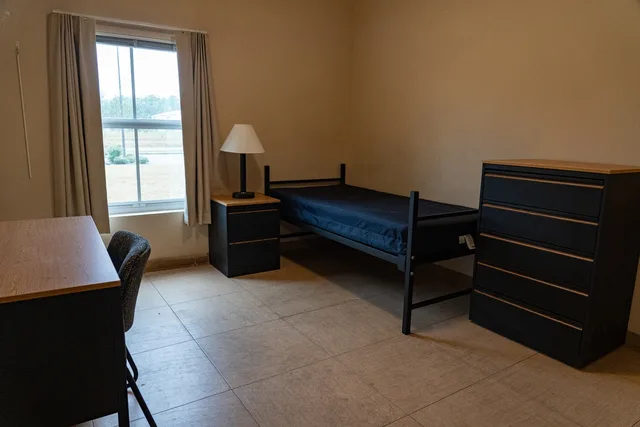
In government-owned quarters (barracks, dorms, and the small number of remaining government-owned family homes), housing is assigned “in kind.” You never see the BAH money — it’s forfeited under 37 U.S.C. 403 because the military is housing you directly. Barracks for junior enlisted are genuinely free: no rent, no BAH, no bill.
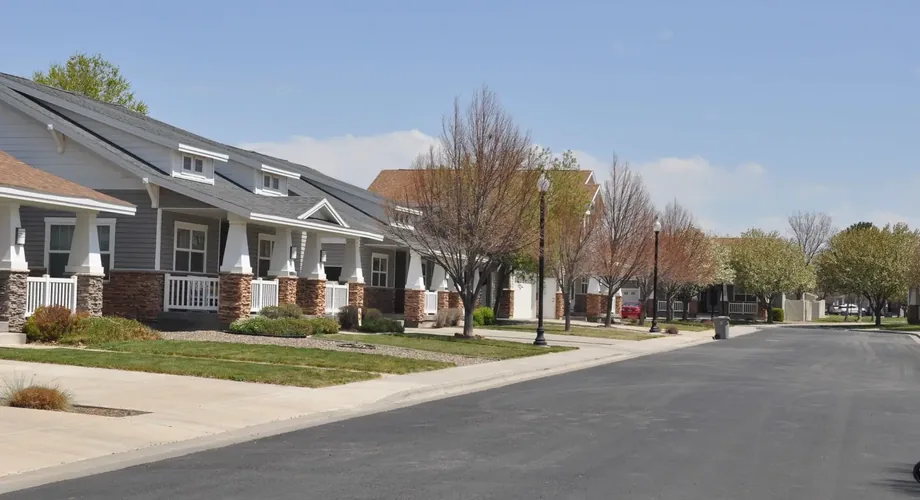
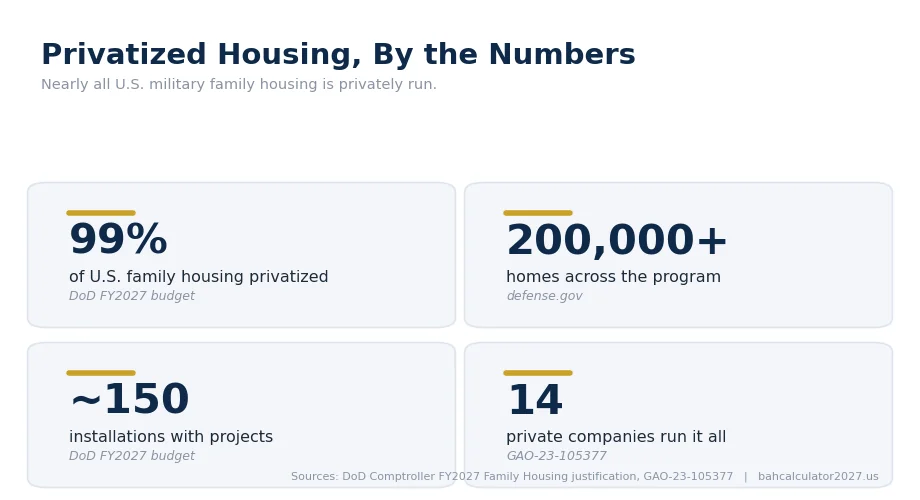
In privatized housing, which is nearly all family housing today, you DO receive your BAH — and then your entire BAH — tax-free income — is paid to the private landlord as rent. Same grade, same rank-based number, but instead of a landlord off base, it’s a company like Balfour Beatty, Corvias, or Hunt under the Military Housing Privatization Initiative (MHPI), authorized by Congress in 1996.
| Government-Owned Quarters | Privatized Housing | |
|---|---|---|
| What happens to your BAH | Forfeited — you never receive it | Paid to you, then 100% goes to landlord as rent |
| Rent basis | None (housing “in kind”) | Capped at your BAH by grade |
| Who manages it | Your service branch | A private company (14 nationwide) |
| Utilities | Usually included | Baseline allowance; overages billed to you |
| Who you complain to | Chain of command | Landlord → housing office → formal dispute process |
| Share of family housing | Shrinking (~1% left) | ~99% of U.S. family housing |
How Privatized Housing Rent Actually Works
Here’s the mechanics, stripped of mystery. Once you’re assigned a privatized home:
1. Your rent is set at 100% of your BAH — the with-dependent rate for your pay grade at your duty station. Not market rent. Not a flat fee. Your grade determines your rent, and the company cannot charge more than your individual BAH. 2. It’s paid by allotment in arrears — the rent comes out of your pay automatically after the month it covers. 3. When BAH goes up, your rent goes up — and when it drops, your rent drops. Your landlord’s revenue is pegged to your allowance, not to the housing market. The average 2026 BAH increase flowed straight into privatized rents.
That pegging is why “does military housing take all your BAH?” has a clean answer: yes, for privatized housing, it takes all of it. You don’t keep a difference if your BAH is higher than the local market — the rent IS your BAH. This is also why living off base can be the better financial move in cheap housing markets: off base, you keep the spread between your BAH and your actual rent.
One important timing catch: at move-in, there’s often a gap between when you move in and when your first rent allotment processes. That gap can come out of your pocket — several housing guides flag this, and it’s worth budgeting for before you sign the lease.
What Your Rent Looks Like — 2026 Examples (Fort Hood, MHA TX286)
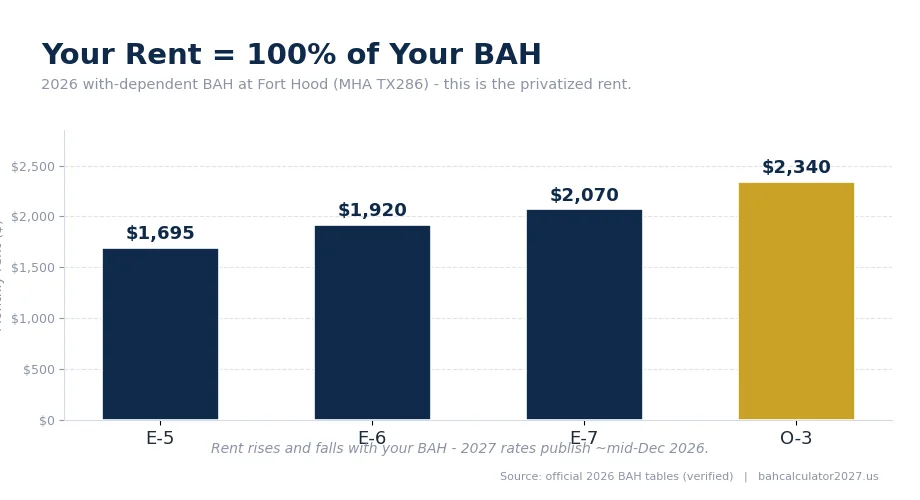
To make this concrete, here is what the 2026 with-dependent BAH — and therefore the privatized rent — was at Fort Hood, Texas (MHA TX286), straight from the official 2026 rate tables:
| Grade | 2026 With-Dependent BAH | Your Privatized Rent |
|---|---|---|
| E-5 | $1,695 | $1,695 |
| E-6 | $1,920 | $1,920 |
| E-7 | $2,070 | $2,070 |
| O-3 | $2,340 | $2,340 |
That’s it — the table is boring on purpose. Your rank is your rent. An E-5 and an E-6 living on the same street in identical floor plans pay different rents, because they’re paying their BAH, not a market price. When the official 2027 BAH rates publish around mid-December 2026, these numbers — and every privatized rent on that installation — adjust automatically.
What’s Included in the Rent — and What You Pay Out of Pocket
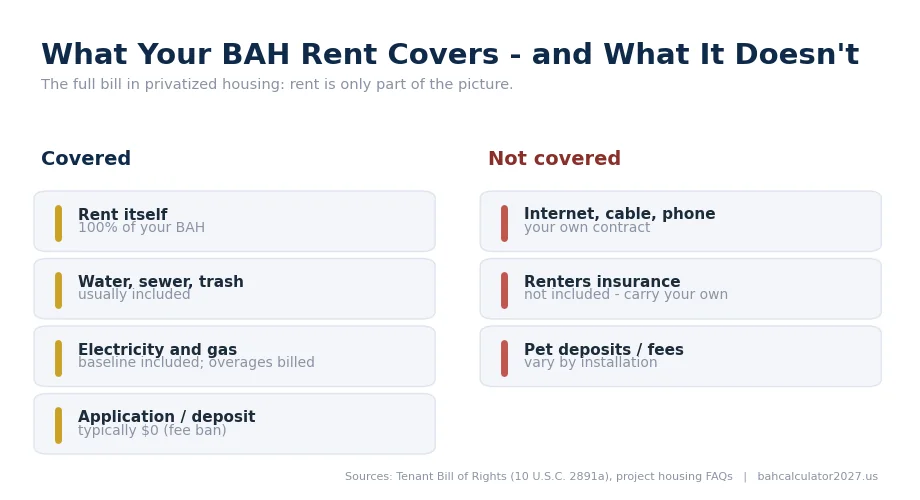
“Not free” becomes clearer once you see the full bill. Here’s how costs typically split in privatized housing:
| Cost | Covered by your BAH rent? |
|---|---|
| Rent itself | Yes — 100% of your BAH |
| Water, sewer, trash | Usually included by the project |
| Electricity and gas | Baseline utility allowance included; overages billed to you |
| Internet, cable, phone | Not included — you contract directly |
| Renters insurance | Not included — you carry your own |
| Application / security deposit | Typically $0 (Tenant Bill of Rights bans non-refundable fees) |
| Pet deposits / fees | Varies by project — breed restrictions and deposits are installation-specific |
Two things worth knowing. First, most projects run a resident energy program: a baseline utility allowance is baked into your rent, but if your household runs hot (literally), the overage lands on you. Second, the BAH rate itself only covers about 95% of median housing costs — the 5% member cost-share works out to roughly $93–$212 per month in 2026, according to Navy Mutual’s 2026 analysis. That gap is why base housing can still feel like it costs you something even when “rent is BAH.”
Dual-Military Couples: Who Pays What?
If both spouses serve, the rent is based on the higher-ranking member’s with-dependent BAH — and the couple keeps the junior member’s BAH. That’s the standard project policy (confirmed in privatized housing FAQs), and it matches the underlying BAH rule: in a dual-military household the couple chooses which member receives the with-dependent rate, with the senior member as the tiebreaker only.
Quick example: an E-6 married to an E-4 at Fort Hood would pay $1,920/month (the E-6’s with-dependent rate) — and keep the E-4’s BAH on top of it. Off base, that couple keeps both allowances minus one rent. On base, the math is still the same single-rent rule — your BAH goes to the landlord, and anything above that is yours.
Your Rights as a Tenant — the 18-Point Bill of Rights
This is the section that matters most after the housing scandals of the last decade, and it’s the one competitors barely mention. The FY2020 National Defense Authorization Act (signed December 20, 2019) created an 18-point Military Housing Tenant Bill of Rights, codified at 10 U.S.C. § 2891a. Fifteen of the 18 rights were signed by the services in February 2020; by March 2023, the GAO reported 11 of the 14 housing companies had fully implemented all 18, with the remaining three at 16 of 18.
The rights that actually change your leverage:
– No non-refundable fees — landlords can’t stack junk fees on top of your BAH rent, beyond optional amenities, utility overages, and damage you cause. – Access to your unit’s maintenance history before you sign the lease. – A formal dispute process (10 U.S.C. § 2894) with statutory teeth: the housing office must acknowledge your dispute within 2 business days and complete its investigation — including a physical inspection — within 7 business days. – BAH escrow during disputes — your rent payments can be withheld in escrow until the dispute is resolved, so you’re not paying full rent for a home with black mold while you fight about it. – Protection from reprisal for reporting problems.
The complaint chain runs: your landlord’s neighborhood office → the installation military housing office → the formal dispute process (decided by a senior commander) → legal/IG channels if everything else fails. Knowing this chain before you need it is the entire point — most families only learn it during a crisis.
How We Got Here — The 2018–2026 Reform Timeline
The Tenant Bill of Rights didn’t come from nowhere. A decade of investigative reporting and congressional action forced the system to change:
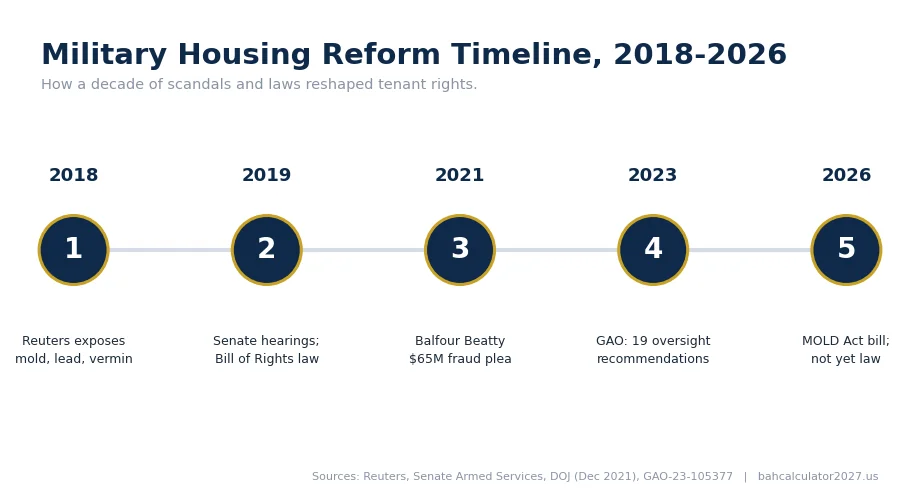
– 2018: Reuters’ “Ambushed at Home” investigation exposed mold, vermin, and lead contamination across privatized housing. The response from landlords and the Pentagon was limited. – 2019: Senate Armed Services Committee hearings — military spouses testified about mold, lead paint, rodents, and asbestos. A Military Family Advisory Network survey found 56% of 14,558 residents reported negative experiences. Army leaders visited more than 19,000 homes. – December 2019: The FY2020 NDAA created the Tenant Bill of Rights, a Chief Housing Officer requirement, and a DoD-wide complaint database. – 2020: The first 15 rights rolled out across installations. – December 2021: Balfour Beatty Communities — one of the largest landlords — pleaded guilty to major fraud against the United States, agreeing to over $65 million in criminal fines and restitution for falsifying maintenance records from 2013–2019 to collect performance bonuses. The company got three years’ probation and an independent compliance monitor. – 2022–2023: A Senate investigation found problems persisting at Balfour Beatty even after the plea; the GAO issued 19 recommendations to fix DoD oversight (GAO-23-105377). – 2025: A DoD Inspector General audit (DODIG-2025-154) found systemic oversight failures and negligent maintenance by private contractors across multiple installations. – 2026: The MOLD Act (H.R. 7188 / S. 3654), introduced January 15, 2026 by Rep. Jimmy Panetta and Senators Blumenthal, Ernst, Sheehy, and Hirono, would set enforceable health and safety standards — independent certified inspections at every turnover, remediation or relocation within 30 days of a failed inspection, landlord-paid inspections and relocations, and BAH refunds for uninhabitable units. A Senate cloture vote failed 50–46 on July 14, 2026 (60 votes needed); a narrower housing package advanced through the NDAA process. As of this writing, the MOLD Act is not law. If it passes in some form, it will be the biggest tenant-protection change since 2019 — this article will be updated when it does.
Applying, Waitlists, and PCS
Privatized housing runs on applications and waitlists, not first-come-first-served move-ins. The pattern across installations (project-reported, so it varies):
1. Apply as soon as you have PCS orders — most projects let you start the application online before you arrive. 2. The 30-day window matters. At Fort Jackson, for example, applying within 30 days of arrival sets your eligibility date to the date you departed your last permanent duty station. Apply later and you’re waitlisted by application date — months of difference. 3. Bring the paperwork: PCS orders, LES, DEERS enrollment (DD Form 1172), marriage certificate, birth certificates for dependents. 4. Neighborhoods are rank-structured — homes are designated by rank bands, which is part of why your rent is your BAH: the house you qualify for roughly matches your allowance.
Two deployment/PCS facts families ask about most: your family can stay in privatized housing while you deploy — the lease and allotment continue. And a PCS orders your move-out, but also resets the cycle: apply at the gaining installation as soon as orders drop.
Is Base Housing Worth It? (Honest Math)
The honest answer depends on your BAH versus the local market:
– In expensive markets (San Diego, the D.C. area, Hawaii), base housing is usually the winning move — your BAH wouldn’t cover a comparable home off base anyway, and the 95% coverage rule means your out-of-pocket gap is smaller on base. – In cheap markets, living off base often wins financially: you keep the spread between your BAH and your actual rent, which can be hundreds of dollars a month. On base, that spread goes to the landlord by definition. – Convenience has real value — commute time, no house-hunting at a new duty station, built-in community, and schools on post. Plenty of families happily trade the off-base spread for those. – Rate protection applies either way — the individual BAH rate-protection rule (your rate can’t drop while you’re at the same station) protects your allowance whether you live on or off base. Run your own numbers with the BAH calculator before you decide.
What Changes in 2027
Three things to watch:
1. Official 2027 BAH rates publish around mid-December 2026. Your privatized rent will adjust automatically with your new rate — no new lease needed. The DoD’s FY2027 budget request proposed an average 4.2% increase, but that’s a proposal, not a final rate. 2. The housing package in the FY2027 NDAA may carry MOLD-Act-style testing and remediation timelines plus a ban on landlord NDAs. If it passes, tenant leverage increases substantially. 3. This article updates when the rates drop — check back in December for the 2027 figures.
Frequently Asked Questions
1. Is military housing really free?
No — not for families. Barracks and dorms are genuinely free for junior enlisted (you receive no BAH at all). Privatized base housing costs 100% of your BAH: you receive the allowance and all of it goes to the landlord as rent.
2. Does military housing take all of my BAH?
In privatized housing, yes — your rent equals your full with-dependent BAH for your grade. In government-owned quarters, you forfeit BAH instead of receiving it. Either way, the military isn’t handing you free housing plus cash.
3. What’s the difference between government-owned and privatized housing for my paycheck?
Government quarters = BAH forfeited, housing assigned in kind, no rent bill. Privatized housing = BAH paid to you, then 100% allotted to the landlord as rent. About 99% of U.S. family housing is now privatized.
4. Do I pay utilities in privatized military housing?
Mostly no — a baseline utility allowance is included in your rent. But overages are billed to you, and internet, cable, and phone are always your own contract. Water, sewer, and trash are typically included by the project.
5. Can the housing company charge extra fees on top of BAH?
Generally no. The Tenant Bill of Rights bans non-refundable fees on top of BAH rent. Exceptions: optional amenities you choose, utility overages, and damage you cause. Pet deposits and fees vary by installation.
6. What are my rights as a military housing tenant?
The 18-point Tenant Bill of Rights (FY2020 NDAA) covers fee bans, maintenance-history access, prompt repairs, a formal dispute process with 2-day acknowledgment and 7-day investigation, BAH escrow during disputes, and protection from reprisal.
7. What happens to my housing if I deploy or PCS?
Your family can stay in privatized housing during a deployment — the lease and allotment continue. A PCS ends your current arrangement; apply at your gaining installation as soon as orders arrive.
8. Do dual-military couples pay double?
No. Rent is based on the higher-ranking member’s with-dependent BAH, and the couple keeps the junior member’s BAH.
9. Is barracks housing really free?
Yes. Junior enlisted in barracks or dorms receive no BAH and pay no rent — that’s the one form of military housing that’s genuinely free.
10. How do I apply for base housing?
Apply through the privatized housing company at your installation as soon as you have PCS orders. At many bases, applying within 30 days of arrival preserves your eligibility date. Expect to provide PCS orders, your LES, DEERS enrollment, and dependent documentation.
The Bottom Line
Military housing isn’t free — it’s a trade. In privatized housing, the trade is your entire BAH for a home with no deposit, no house-hunting, and no surprise rent hikes, managed by a company that works for the rent your grade earns. Know the two systems, know your 18 rights, and run your BAH numbers for your actual duty station before you choose. That’s the decision that matters — and now you have the facts to make it.
Sources: DoD Comptroller FY2027 Family Housing budget justification; GAO-23-105377 (Jan 2023); 10 U.S.C. §§ 2871–2885, 2891a, 2894; FY2020 NDAA (Pub. L. 116-92); DOJ release on Balfour Beatty Communities plea (Dec 22, 2021); militaryonesource.mil BAH guidance; Navy Mutual 2026 BAH analysis.
Last updated: October 22, 2026. BAH rates shown are official 2026 figures; 2027 rates publish ~mid-December 2026.